08 October 2026
Why Precision Agriculture Services Are Worth a Second Look
Presented by @w6dnnro2hf
The shift from guesswork to ground truth
Farming has always been a game of judgement. You watch the sky, walk the fields, scratch the soil, and hope you have read the signs right. But the margin for error keeps shrinking. Input costs climb, weather turns erratic, and buyers expect consistent quality. The old approach of treating every acre the same is becoming harder to justify.
That is where precision agriculture services come in. Instead of assuming the whole field needs the same rate of fertiliser or the same spray programme, you can now match what you do to what each part of the field actually needs. It sounds simple, but the shift in mindset is significant. You are no longer applying inputs by habit. You are applying them by evidence.
What precision agriculture actually looks like on the ground
At its core, precision agriculture is about collecting better data and acting on it. Soil sensors give you a continuous read on moisture and nutrient levels, not just a single lab test from one spot. Yield mapping shows how different areas of the field performed in previous seasons. NDVI imagery from agricultural drones reveals crop stress long before it becomes visible from the cab of a tractor.
This is not about buying a fancy screen for the tractor and calling it a day. The real value comes from closing the loop between data and action. When you know that a particular zone has low organic matter and a history of poor yield, you can adjust your variable rate application to give that zone a little more granular fertiliser. On the stronger ground, you can cut back. The result is a more even crop, less wasted input, and a cleaner nutrient budget.
One of the most practical examples I have seen was on a broadacre farm in the east of England. The grower had been spreading the same base rate of fertiliser for years because that was what the agronomist had always recommended. After a season of soil sensing and yield mapping, they found that nearly a third of the field was being over-fed. The savings on fertiliser alone paid for the precision agriculture services within the first year. The crop did not suffer. If anything, it came in more uniform.
The drone factor in modern agronomy
Agricultural drones have become a familiar sight over British fields, and for good reason. They are fast, they are precise, and they can get to places that ground equipment struggles with. A drone can cover a large area in a morning, whether it is for crop scouting or for application work.
When it comes to spraying, the DJI Agras series has set a benchmark. These machines carry a decent payload, fly with GPS guidance, and can be programmed to follow the exact contours of the field. That means less overlap, less drift, and a more even coverage than you might expect from a conventional sprayer on tricky terrain. The same goes for spreading. Seed coating, granular fertiliser, even slug pellets can be applied from the air with variable rates, which is a huge advantage when you are working on wet ground where a tractor would cause compaction.
There is a trade-off to consider. Drones have limited battery life and payload compared to a full-size spreader. They are not going to replace a 24-metre boom sprayer on a 500-hectare arable unit. But for spot treatments, late-season top-ups, and areas that are awkward to reach, they are hard to beat. The key is to match the tool to the job, and that is where a good service provider earns their keep.
How precision fits into the wider farm picture
Precision agriculture is not just about drones and sensors. It is a way of thinking that touches every part of the farm business. GPS guidance has been around for a while, but it is still the backbone of most precision systems. Autosteer reduces driver fatigue and makes sure every pass is exactly where it should be. That alone can save hours of work and reduce fuel use, especially on large fields.
Variable rate application is another piece of the puzzle. Whether you are spreading lime, nitrogen, or seed, the ability to change the rate on the go is a real step forward. It means you can respond to the soil and the crop in real time, not just to an average from a soil test taken three years ago. And when you pair that with NDVI data from a drone or a satellite, you have a much clearer picture of what the crop is doing right now.
There is also the agronomy side. A good agronomist will use all this information to make better recommendations. They are not guessing anymore. They are looking at yield maps, soil sensor logs, and drone imagery to build a prescription that is specific to each field and each season. That is a more collaborative relationship than the old model of a rep coming out once a month with a clipboard.
Making it work on your farm
If you are thinking about bringing precision agriculture services into your operation, the first step is to decide what you actually want to achieve. Is it lower input costs? Better yields on the weak areas? A more efficient use of your time? Or all of the above? The answer will shape the kind of service you need.
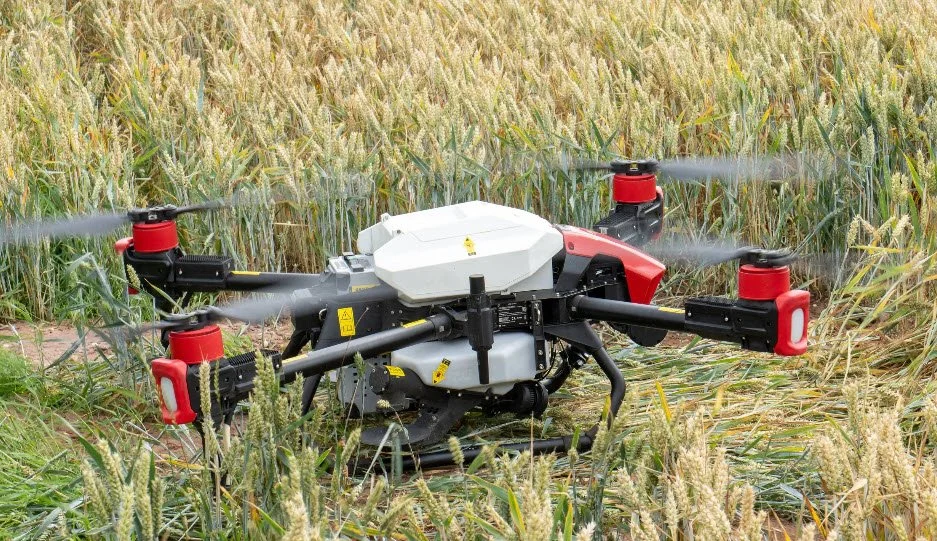
Not every farm needs a full suite of sensors and drones. Sometimes a simple yield map from the combine is enough to start. The next step might be a season of crop scouting with an agricultural drone to spot drainage issues or pest pressure early. From there, you can move into variable rate application and start to fine-tune your inputs.
One thing I have learned is that precision agriculture is not a one-off purchase. It is an ongoing process. The data builds up over years, and the more seasons you have, the more useful it becomes. A single year of yield mapping is interesting. Five years of it starts to show patterns that you would never have noticed otherwise.
There are also practical considerations. Drone work requires trained pilots and the right permissions. Spreading and spraying from the air is not something you can just do with any drone and a backpack. That is why many farmers choose to work with a specialist provider rather than buying their own equipment. It saves the capital cost and the hassle of keeping up with regulations and training.
I have spoken to several growers who tried the DIY route with a small drone and were disappointed. The technology is not the problem. It is the expertise. Knowing when to fly, how to interpret the imagery, and how to turn it into an application map takes experience. That is what a good service brings.
The economics of precision
Let us talk money, because that is what it comes down to in the end. Precision agriculture services are not cheap. You are paying for skilled operators, high-end drone platforms, and the software to process the data. But the returns can be substantial if you use the information properly.
Consider a typical winter wheat field. If variable rate application helps you cut nitrogen use by 10 percent without losing yield, that is a direct saving. Add in the time saved by not having to walk every field every week, and the picture starts to look better. On top of that, there is the potential to improve yield on the areas that were previously underperforming. That is where the real money is.
There is also the matter of timing. A drone can be out the day after rain to assess slug damage or weed emergence. A ground sprayer might have to wait for the ground to dry. That speed can make the difference between a clean field and one that needs extra passes later.
And do not forget the environment. More precise application means less agrochemical in the water and less fertiliser running off into the ditches. That is a story you can tell your neighbours, your buyers, and the regulators. Farm efficiency and environmental stewardship are not opposites. They are the same thing when you do it well.
Practical steps to get started
If you are new to precision agriculture, here are a few things to keep in mind.
- Start small. Pick one field and one issue, such as variable rate nitrogen, and work from there.
- Get good data. Make sure your yield maps are clean and your soil samples are representative.
- Work with people who know both farming and technology. The best agronomists can talk to both.
- Be patient. The benefits build over seasons, not weeks.
- Keep an open mind. The technology is evolving fast, and what seems complex now will soon be standard.
The world of agriculture is not going to become less data-driven. If anything, the pressure to produce more with less will only increase. Precision agriculture services offer a way to meet that challenge with confidence, using information instead of instinct. It is not about replacing the farmer. It is about giving the farmer better tools to make the calls that matter.